Sod FAQ's and other General Tips & Tricks
When is the best time of year to install sod?
Turfgrass sod can be installed year-round, even on frozen ground, if sod is available; however, sodding during the heat of summer will require more water than during cooler periods. Seeding or sprigging is best attempted in the Fall in most areas, with Spring being the second best time. Winter and Summer planting of seed or sprigs is strongly discouraged.
Looking for Sod?
Black Beauty Turf Type Tall Fescue Sod See it Now
New England Grown Bluegrasss Sod by Rolls See it Now
Can a homeowner install turfgrass sod?
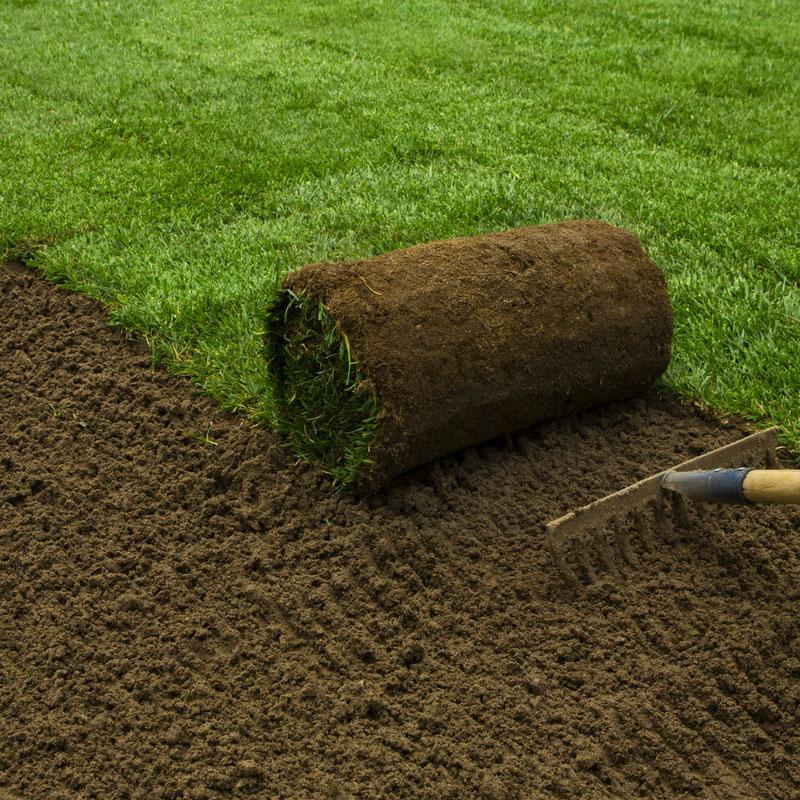
If you can understand "Green Side Up," you can successfully install sod. Because turfgrass sod can be heavy, the help of a few friends is recommended.
Is seeding cheaper than sodding?
A big bag of grass seed will cost less than a pallet of sod, but that is like comparing the cost of raw wool to a fine sweater. Turfgrass sod is a finished product that will provide nearly instant use, beauty and environmental benefits, whereas seed is an unknown that requires two or more years of on-going time, attention, water, fertilizer and pesticides to reach a maturity equal to sod on its first day.
What do I look for to determine quality and freshness?
Sod is a living plant that should be installed between 24 to 72 hours after it is first harvested from the farm field. The best indication of freshness is soil that is moist (not hard and dry). The grass blades should be dark green and cool to the touch.
Strength of sod can be tested by holding a piece by its narrow end and raising it overhead, without it tearing or falling apart.
Uniformity of texture, mowing height and overall quality, can best be determined by placing several pieces on the ground and looking for extreme variations or visible weeds.

What are the basic steps to installing sod?
1. Prepare the soil as if you were seeding
2. Measure the area to be sodded to calculate the quantity you’ll need to order
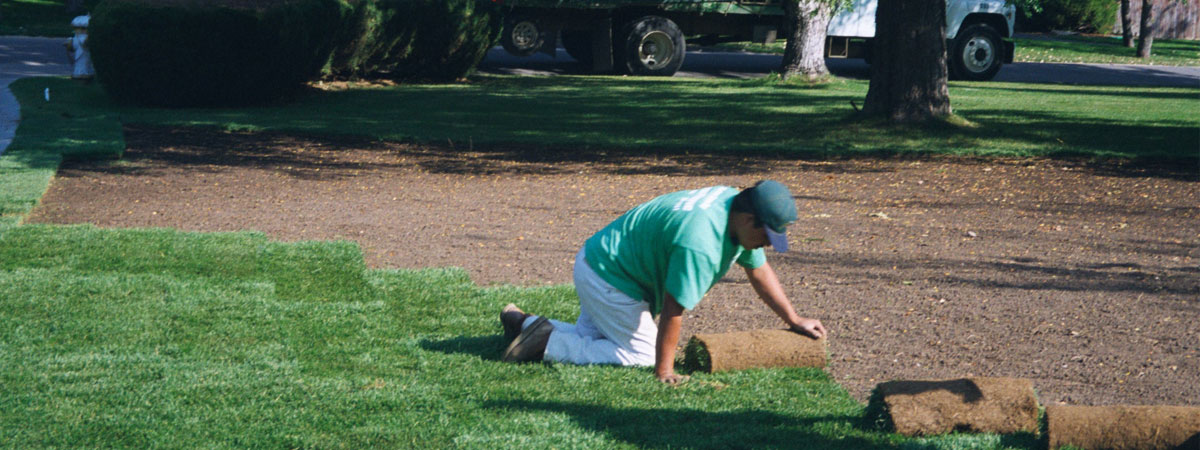
3. Lay the first piece along a straight line such as a driveway or sidewalk
4. Install all additional pieces so the seams create a brick-like pattern
5. Apply at least one inch of water on the new sod, beginning within 30 minutes of laying down the first piece
6. Keep the base soil moist daily (or more frequent) watering for the next two weeks
Are there any "tricks of the trade" to make the installation better?
Sodding is simple, but it can be made easier by:
- Leveling the soil approximately one-inch below any hard surfaces such as patios, sidewalks and driveways so that when the sod is installed it won’t be higher or lower than the hard surface.
- Asking the delivery driver to place the pallets of sod across the yard, approximating how much each pallet will cover…this will reduce the time and distance you’ll might have to otherwise carry each piece.
- If there’s any slope, begin sodding at the bottom and work your way up the slope to keep the seam and joints tightly together. If the slope is quite steep, run the pieces across the direction of the slope.
- To make sure you are applying enough water, lift a corner of any piece of sod and insert a screwdriver or other sharp probe into the underlying soil. If it’s hard to push in or the soil’s not moist, keep watering.
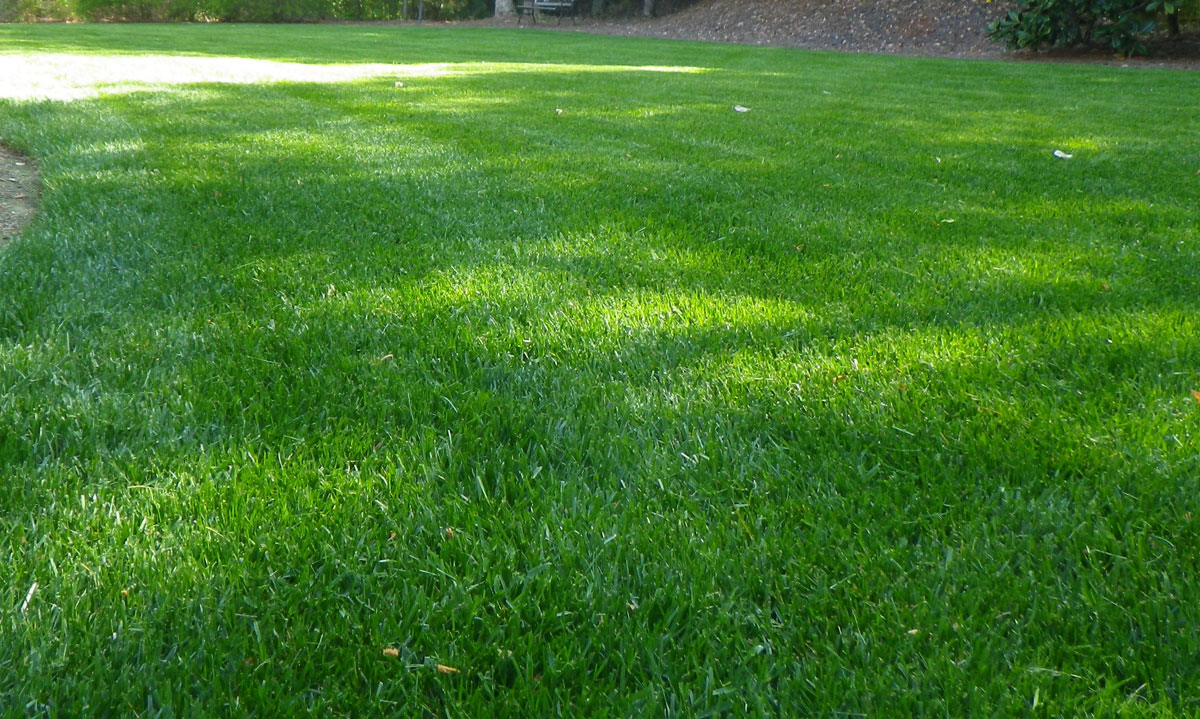
What can I do to maintain a beautiful lawn?
- Quality grass simply needs water, air, sunlight and nutrients. In most areas, grass needs approximately one-inch of water a week. Infrequent and deep watering encourages deep roots and a healthy lawn.
- Mow frequently enough (with a sharp blade) so you never cut-off more than one-third of the grass blades in a single mowing. This will also allow you to leave the clippings on the lawn so they can naturally degrade and return nutrients to the lawn.
- Prune trees so they allow as much light as possible onto the lawn.
- Fertilize at least annually, or according to the specific needs of your lawn.
- Aerate every other year to reduce compaction and increase the exchange of water and air at the root level.
How can I patch thin or dead areas?
Turfgrass sod can provide an instant patch by cutting out the old grass and trimming in a sod patch. It’s easy, simple and immediate.
Seeding can be used when the area is small by raking out the old grass, loosening the soil and sprinkling seed. Keep the seed very moist with waterings two or three times a day until it matures.
Turfgrass "Factoids"
Above Ground:
.jpg) Grass plants are 70 to 80% water
Grass plants are 70 to 80% water
- Grass clippings are 90% water
- Grass clippings contain 4% nitrogen, 2% potassium and 0.5% phosphorus
- A 10,000 square foot lawn will contain:
- 6 grass plants per square inch
- 850 plants per square foot
- 8.5 million plants total
Below Ground:
- 90% of the weight of grass is in its roots
- A single grass plant has 387 miles of root
- There are 329,000 miles of root per square foot
- 3 billion miles of roots in a 10,000 square foot lawn
- Turfgrass sod is a superior form of erosion control, with tests documenting:
- A dense lawn is 6 times more effective than a wheat field and 4 times better than a hayfield at absorbing rainfall.
- Sediment losses from sodded areas will be 8 to 15 times less than for tested man-made erosion control materials and 10 times less than for a straw covered area.
- Runoff from a sodded area will take 28 to 46 times longer than for five popular erosion control materials.
A 50 by 50 foot lawn (2,500 square feet) releases enough oxygen for a family of four, while absorbing carbon dioxide, hydrogen fluoride and perosyacetyle nitrate.