What is Growing in My Landscape Mulch?
What is Growing in My Landscape Mulch?
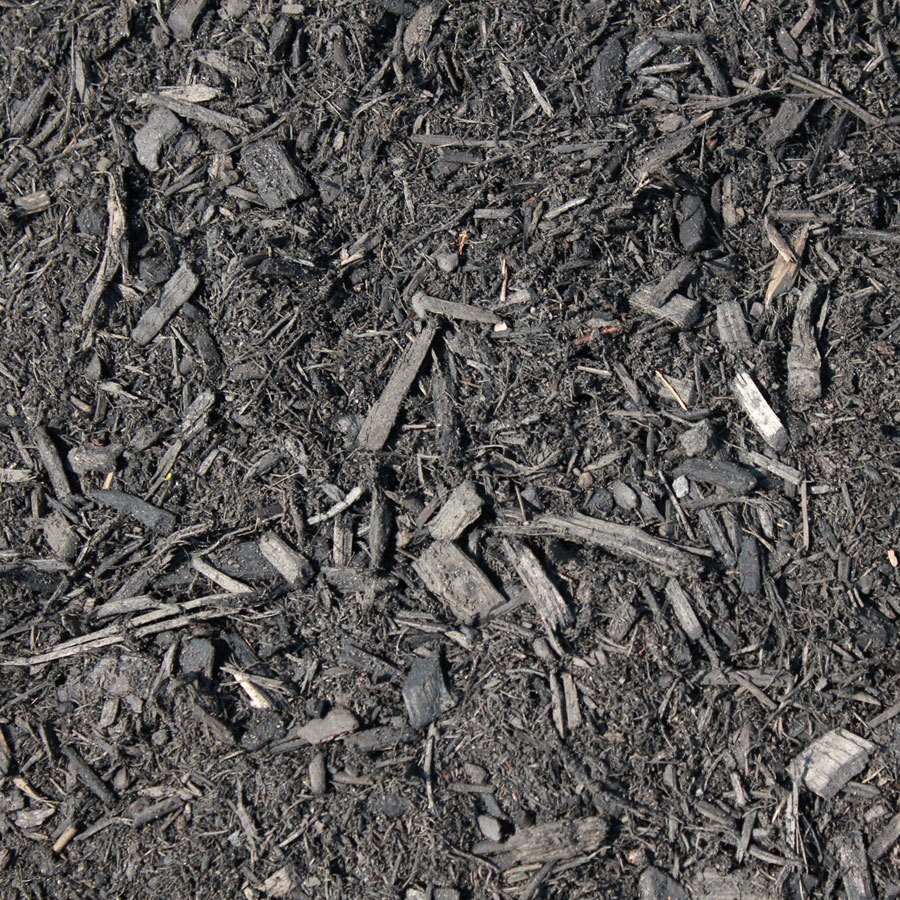
Landscape mulches are used to protect soil, conserve moisture, moderate soil temperature, and limit weed growth, as well as beautify and unify landscape plantings. Most mulches are mixtures of shredded wood and bark residues from lumber and paper mills, arboricultural and land-clearing operations, and wooden pallet disposal or recycling facilities.
Like other organic matter, wood and bark decompose over time. The primary organisms involved with their decomposition are bacteria and fungi, which derive their energy for growth from the carbon-based compounds found in wood and bark. These compounds include cellulose, lignin, and simple sugars. Bacteria are microscopic organisms that are not visible in the mulch. Fungi also may be microscopic, but many develop visible reproductive structures.
The fungi involved in the decomposition of landscape mulches are natural components of the mulch environment. Some fungi, such as the artillery fungus, are “recyclers” and break down woody tissue directly. Other fungi, such as slime molds, consume bacteria and other organisms living in the mulch. These fungi are not harmful to landscape plants, and no known health hazards are associated with them unless they are eaten. They can be found from April through October, usually following rainy weather.
Common Mulch Organisms and What to Do about Them
Mushrooms
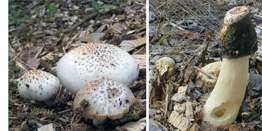
Common names: mushrooms, toadstools
Scientific names: Many different fungi produce mushrooms.
What do mushrooms look like?
They come in various colors, shapes, and sizes ranging from less than an inch to several inches tall. Some are soft and fleshy and disappear soon after they emerge; others may remain in mulch for a few days, weeks, or an entire growing season.
Are they a problem?
They may be poisonous if eaten.
What should be done?
Appreciate their beauty; ignore them; or remove them.
Slime Molds
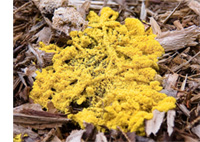 Common names: slime molds, “dog vomit” fungus
Scientific names: species of Physarum, Fuligo, and Stemonitis
What do slime molds look like?
They start as brightly colored (yellow, orange, etc.) slimy masses that are several inches to more than a foot across. They produce many tiny, dark spores. These molds dry out and turn brown, eventually appearing as a white, dry powdery mass.
Are they a problem?
No. These fungi are “feeding” on bacteria growing in the mulch. They are normally a temporary nuisance confined to small areas.
What should be done?
The fungi may be left in place to decompose. If their appearance is offensive, discard the fruiting bodies in a compost pile, household garbage, or a spot in the yard away from existing mulch.
Bird's Nest Fungus
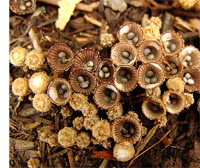
Common name: bird’s nest fungus
Scientific names: species of Crucibulum and Cyathus
What do bird’s nest fungi look like?
They resemble tiny grey to brown bird’s nests or splash cups with eggs. The nest is up to 1/4 inch in diameter.
Are they a problem?
These fungi may grow in large areas of mulch, but they are not a problem. The “eggs” are masses of spores that splash out of the nest when hit by a raindrop. These spores occasionally stick to surfaces, as do the spores of the artillery fungus, but they are easily removed and do not leave a stain.
What should be done?
These naturally occurring fungi decompose organic matter and do not need to be removed. They are interesting to look at—show them to children!
Artillery Fungus
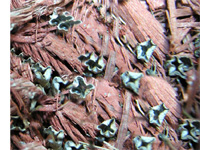
Common name: artillery fungus, cannon fungus, shotgun fungus
Scientific name: species of Sphaerobolus
What do artillery fungi look like?
They resemble a tiny cream or orange-brown cup with one black egg. The cup is approximately 1/10 of an inch in diameter. Areas of mulch with artillery fungi may appear matted and lighter in color than the surrounding mulch.
Are they a problem?
They may be a problem. The fruiting body of this fungus orients itself towards bright surfaces, such as light-colored houses or parked automobiles. The artillery fungus “shoots” its black, sticky spore mass, which can be windblown as high as the second story of a house. The spore mass sticks to the side of a building or automobile, resembling a small speck of tar. You may also find them on the undersides of leaves on plants growing in mulched areas.
Once in place, the spore mass is very difficult to remove without damaging the surface to which it is attached. If removed, it leaves a stain. A few of these spots are barely noticeable, but as they accumulate, they may become very unsightly on houses or cars.
What should be done?
To date, there are no known controls for this fungus.
One solution to the artillery fungus problem that is not horticulturally sound is to replace wood-based mulch with other types of mulch, such as black plastic or stone, in critical areas adjacent to homes and parking areas.
Information provided by Elizabeth A. Brantley and Donald D. Davis, Department of Plant Pathology; and Larry J. Kuhns, Department of Horticulture. © The Pennsylvania State University 1997